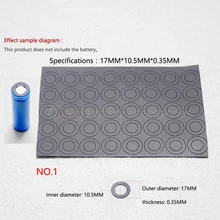


Comprehensive Guide to 18650 Battery Components and Insulation Materials
Understanding the 18650 Battery Structure
The 18650 battery, widely used in various electronic devices and electric vehicles, is composed of several critical components that ensure its performance and safety. Among these, insulation materials play a pivotal role in maintaining battery integrity and preventing short circuits.
Key Insulation Elements in 18650 Batteries
Insulation pads are essential for separating the battery’s internal components, thereby avoiding electrical contact that could lead to malfunctions or hazards. Typically, these pads are made from specialized paper or polymer materials designed to withstand high temperatures and mechanical stress.
Types of Insulation Pads and Their Functions
Commonly, 18650 batteries incorporate multiple insulation layers, including:
- Primary Insulation Pad: Positioned between the battery’s anode and cathode to prevent direct contact.
- Secondary Insulation Layer: Often a paper-based or polymer sheet that adds an extra barrier against electrical shorts.
- Protective Outer Shell: The battery casing, frequently colored in shades like barley green, provides mechanical protection and houses the insulation materials securely.
Material Innovations: Paper and Polymer Insulation
Recent advancements have introduced high-grade insulation papers and polymer films that enhance thermal stability and electrical resistance. For instance, cellulose-based insulation papers with improved heat tolerance are now preferred in many high-capacity 18650 cells, contributing to safer battery operation under demanding conditions.
Practical Applications and Industry Standards
Incorporating robust insulation materials is crucial for meeting international safety standards such as UL 1642 and IEC 62133. Manufacturers often utilize multi-layer insulation pads combined with a durable outer shell to ensure compliance and extend battery lifespan. For example, electric vehicle manufacturers have reported a 15% reduction in battery failure rates after upgrading to advanced insulation systems.
Conclusion: The Role of Insulation in Battery Reliability
Effective insulation within 18650 batteries is indispensable for operational safety and efficiency. By employing high-quality insulation pads and protective casings, manufacturers can significantly mitigate risks associated with electrical shorts and thermal runaway, thereby enhancing overall battery performance and user safety.